
Cape Town Heritage Horizons
Under the High Patronage of H.S.H. Princess Charlene
Cape Town Opera, which celebrated its 25th birthday in 2024, is one of the largest full-time performing arts institutions in South Africa. The company offers a diversity of productions, from mainstage operas to site-specific performances, touring productions, musicals, and concerts. It caters to audiences of all ages and commits to creating jobs for the entire theatre industry.
Cape Town Opera provides support and development opportunities through initiatives like the National Schools Tour, the Foundation Studio for highschool learners and the Judith Neilson Young Artist Programme for postgraduate singers, pianists, and conductors.
The Cape Town Opera Chorus is one of the most compelling and varied vocal ensembles in the world and winner of “Chorus of the Year” at the 2013 International Opera Awards. This concert brings to us choral works that emanate directly from South Africa’s musical and cultural landscape. Rooted in traditional isiZulu and isiXhosa songs, they reflect themes of faith, memory, grief, and resilience. Placed alongside works such as Baba Yetu, the programme highlights South Africa’s choral tradition as a living, communal practice — one that carries history, language, and shared experience, while continuing to evolve in contemporary performance.
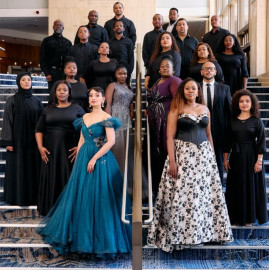
Cape Town Opera Chorus
One of the most compelling and varied vocal ensembles on the operatic stage, South African Cape Town Opera Vocal Ensemble received the Chorus of the Year prize at the 2013 International Opera Awards in London— placing Cape Town Opera among the world's leading companies and recognising its emotional honesty, stylistic flexibility and unmistakably South African identity. The ensemble's repertoire spans the great operatic canon alongside sacred works, jazz, African choral music, spirituals and contemporary compositions. Known for their versatility and vibrant singing, the Chorus maintains a busy schedule, performing on stages around the globe. He notably distinguished himself with his own production of Porgy and Bess, which was presented during a European tour. Under the leadership of Chorus Master Antoinette Huyssen, the singers perform in multiple languages, including South Africa's indigenous languages, bringing classical technique and live musical experience to every stage.
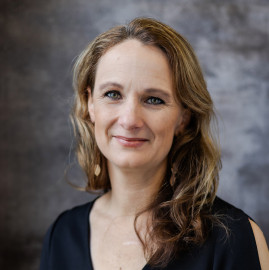
Antoinette Huyssen
South-African born Antoinette Huyssen is Chorus Master at Cape Town Opera and also directs the Cape Town Chamber Choir. She holds a Master's degree cum laude in classical voice from the University of Cape Town (UCT). She also holds a Postgraduate Diploma from the same University and a distinction for the Trinity College London, and completed her Bachelor of Music degree at the UCT in piano and classical guitar in 2001. Antoinette Huyssen was a student conductor at the Drakensberg Boys' Choir school in 2003 and, commencing that year, she studied choral conducting under the Norwegian conductor, Kåre Hanken. She was Director of Music of the Philharmonia Choir of Cape Town from 2006 to 2012, during which time she had the opportunity to conduct several of their concerts together with orchestra, including Handel’s Messiah. She lectured in voice at Stellenbosch University from 2016 to 2021 and taught singing for the South African Army. She worked as a vocal coach and accompanist at the College of Music, UCT, from 2010 until 2017. As a soprano, Antoinette is a frequent oratorio soloist together with the Philharmonia Choir of Cape Town and the Symphony Choir of Cape Town. Antoinette enjoys performing Art Song repertoire and has sung for the Songmakers’ Guild on several occasions. Other great passions of hers are historically informed performance practice and ensemble singing.
XHOSA TRADITIONAL
“Bawo, Thixo Somandla”
SOTHO TRADITIONAL
“Mahlo A Bona”
FRANCO PRINSLOO (né en 1987)
“Xam-liedjies”
ZULU TRADITIONAL
“Thonga Lami”
Arranged by Mpumelelo Manyathi
ZULU TRADITIONAL
“Ukuthula“
Solo voice: Fanele Mkhwanazi
STEPHANUS LE ROUX MARAIS (1896–1979)
“Mali die Slaaf se Lied”
Arranged by Christian Ashley-Botha
Solo voice: Ernestine Nur Stuurman, Danielle Speckman, Jason Atherton, Garth Delport
PRINCESS CONSTANCE MAGOGO KADINUZULU (1900–1984)
“Uyephi na”
Arranged by Peter Klatzow et Mzilikazi Khumalo
Solo voice: Rethabile Khaile
MICHAEL MOSOEU MOERANe (1904–1980)
“Sylvia”
Solo voice: Pumza Mxinwa, Nolubabalo Mdayi, Siphesihle Mdena, Lindile Kula
PETER LOUIS VAN DIJK (né en 1953)
“Horizons”
XHOSA TRADITIONAL
“Senzeni Na?”
Voix soliste: Tylor Lamani
XHOSA TRADITIONAL
“Ntyilo Ntyilo”
XHOSA TRADITIONAL
“Thula Baba”
XHOSA TRADITIONAL
“Ndisondela Kuwe”
XHOSA TRADITIONAL
“Indodana”
Arranged by Michael Barrett et Ralf Schmitt
DAN HEYMANN (né en 1960)
“Weeping”
Arranged by Albert Horne
Solo voice: Siphesihle Mdena
TRADITIONAL
“Jerusalema”
Arranged by Luvo Rasemeni
CHRISTOPHER TIN (né en 1976)
“Baba Yethu”
Five facts to discover before the curtain rises
1
Taken as a whole, the pieces performed today by the Cape Town Opera Chrus (South Africa) explore, on the one hand, the sacred songs of the gospel tradition – the South African version, that is – and, on the other, the lament, particularly in relation to the plight of Black people under the apartheid regime. That said, one should certainly not imagine that laments are synonymous with whining; quite the contrary: in them we discover the infinite richness of a culture, the fighting spirit of the people, and their resilience in the face of adversity. The languages sung are mostly drawn from the Zulu, Bantu and Xhosa traditions, as well as other dialects of Eastern South Africa.
2
Sylvia is one of the major works by the South African composer Michael Mosoeu Moerane (1904–1980). His choral writing readily draws on Mahler’s most contemplative works, although a highly virtuoso central section bears a striking resemblance to ragtime. Moerane – not to be confused with the Irish composer Ernest Moeran – specialised in particular in choral composition, given the strong demand from South African choirs keen to tackle a specific and deeply African national repertoire, particularly in schools and churches; but he also composed orchestral works, including a symphonic poem that has been performed as far afield as London and New York, Fatse La Heso (‘My Country’).
3
In 2002, the South African composer Mzilikazi Khumalo (1932–2021) was commissioned to write the very first opera sung in the Zulu language: Princess Magogo kaDinuzulu, which recounts the life of a historical figure of the same name (or nearly so), the Zulu princess Constance Magogo Sibilile Mantithi Ngangezinye ka Dinuzulu. She was herself a musician and a passionate advocate for the traditional, folk and popular repertoire in the South African languages of Zulu and Xhosa. She began doing so as early as the 1930s, with the aim of making sacred pieces – usually reserved for men – more widely accessible; however, the princess, being both highly determined and free-spirited, decided to break the taboos. So much so that she was recorded on numerous occasions, not only by South African Radio but also by German radio. Here we shall hear one of the famous traditional Zulu songs composed by the Princess.
4
South African indigenous languages use several sounds unique to them, known as ‘clicks’. Film aficionados will recall hearing them in the film The Gods Must Be Crazy. One sounds like the sound of a kiss, a second evokes the disapproval expressed by French speakers with ‘tss-tss’, whilst a third is more like a click of the tongue… It’s quite a challenge to incorporate these sounds into choral music.
5
Baba yetu by Hong Kong composer Christopher Chiyan Tin (born in 1976) sets the Lord’s Prayer to music – a great classic of prayer, then – but the story doesn’t end there. In fact, the theme was originally written to accompany the famous video game Civilisation IV, where it is already sung in Swahili, a language spoken by some 150 million people in East Africa in various dialects. This was the first piece of video game music to win a Grammy Award; it has been performed all over the world, including by the Royal Philharmonic Orchestra in London, the Welsh National Opera and the National Symphony Orchestra in Washington.