
Jonathan Tetelman
Jonathan Tetelman’s voice was described by the famous German Frankfurter Allgemeine Zeitung as “of intense, inescapable euphony, warmly grounded, full-bodied, yet admirably elegant and supple”.
Born in 1988 in Chile, Tetelman was adopted to the United States as a baby and raised in New Jersey. His training as an opera singer began as a baritone at the Manhattan School of Music, before transitioning to the tenor range at the Mannes School of Music. If this physical and artistic development places him in an impressive line with legendary predecessors such as Ramón Vinay, Carlo Bergonzi, James King and Plácido Domingo, with all of whom he also shares his captivating temperament and dashing looks, we can look forward to a long and glorious career as a spinto tenor.
And indeed, in the barely ten years since his debut in Puccini’s La bohème at the Tanglewood Festival 2018 and following subsequent European debuts in the same opera, Jonathan Tetelman has established himself as THE tenor for the passionate young lovers in the operas of Puccini, Verdi and composers from the verismo period.
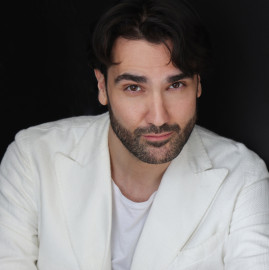
Jonathan Tetelman
The Chilean-American tenor Jonathan Tetelman has rapidly established himself as one of the leading stars of his generation. After his highly anticipated debut at the Vienna State Opera as Turiddu in Cavalleria rusticana, he made his first appearance at Los Angeles Opera as Pinkerton in Madama Butterfly. Subsequently, he performed this same role under the baton of Kirill Petrenko at the Festspielhaus Baden-Baden and in concert at the Berliner Philharmonie. He then returned to the Deutsche Oper Berlin in the title roles of Don Carlo and Werther –Werther which he sang also in Zurich – and to the Las Palmas Opera as Luigi in Il tabarro as well as Roberto in Puccini’s first opera Le Villi. Tetelman then made his debut with the Accademia Nazionale di Santa Cecilia in a concert performance of Tosca, followed by a return to San Francisco Opera as Don José in Carmen and to Munich as Macduff in Macbeth. Tetelman’s concert season has featured his debut in the legendary "Christmas in Vienna" concert series with the Vienna Radio Symphony Orchestra and a New Year’s concert in Gstaad. He presents solo recitals in Munich, Prague, Frankfurt, and at the Elbphilharmonie in Hamburg, sometimes even in “crossover” events accompanied by a simple guitar in programs featuring Broadway, French chanson, Hollywood’s Golden Age scores, and Tango. An exclusive artist with Deutsche Grammophon Gesellschaft, he has already recorded Puccini albums, a disc dedicated to Nino Rota, and several others featuring Neapolitan songs.
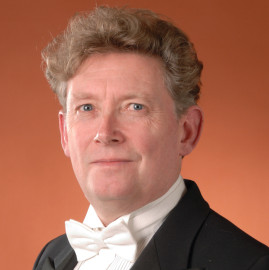
James Vaughan
The Irish pianist James Vaughan is one of Europe's leading recital accompanists and vocal coaches. He worked as first assistant to Ricacrdo Muti on seventeen productions at La Scala di Milano, including all the productions of the Verdi commemorative year in 2001, and accompanied him to several foreign tours and festivals. The following season he was nominated First Pianist and Vocal Coach at the Scala. Parallel to his work in Milan, James Vaughan worked regularly at the Opera Bastille, and since 2007 he has enjoyed a close musical rapport with Daniel Barenboim, working with him on productions including the new Ring cycle created for the Wagner anniversary year 2013 and on the legendary production of Tristan und Isolde. Recently he played in recitals throughout Switzerland with Plácido Domingo, and for a Puccini Anniversary Recital at Teatro alla Scala with Anna Netrebko and Jonas Kaufmann. He has been invited as musical assistant to the Bayreuther Festspiele for the production of Der Ring des Nibelungen, as well as assistant to Riccardo Chailly once again at the Scala. James Vaughan has regularly given masterclasses to both singers and pianists throughout Europe, Asia, and most recently in Montreal and in Venice, as well as appearing regularly on the juries of international singing competitions.
Francesco Paolo Tosti (1846-1916)
« Ideale »
« A vucchella »
ERNESTO DE CURTIS (1875 – 1937)
« Tu ca nun chiagne »
Ruggero Leoncavallo (1857-1919)
« Mattinata »
GIACOMO PUCCINI (1858 – 1924)
La bohème
« Quando me’n vo’ » (« La Valse de Musetta ») (piano solo)
La rondine
« Parigi! E’ la città dei desideri »
Tosca
« Scrivete… E lucevan le stelle »
Entracte
Giuseppe Verdi (1813-1901)
Aida
« Celeste Aida »
La forza del destino
« La vita è inferno… O tu che in seno agli angeli »
Ernesto lecuona (1895-1963)
« Malagueña » (piano solo)
Consuelo Velázquez (1916-2005)
« Bésame mucho »
Pablo Sorozábal (1897-1988)
La taberna del puerto
« No puede ser »
Programme subject to change
Five facts to discover before the curtain rises
1
How did Jonathan Tetelman come to take centre stage on the international opera scene? In the summer of 2018, Roberto Alagna was due to sing the title role in Lohengrin at Bayreuth, but he was replaced at short notice by Piotr Beczala, who consequently left the role of Rodolfo in La bohème at the Tanglewood Festival open. Tetelman, then a quite unknown artist, had only ever sung La bohème in English for a local production at an elementary school with a concert band, but an inspired casting director rang his agent to offer him the role – said director had seen a video of him performing in China and found it convincing. The rest is history: a resounding success, immediately followed by dozens of other engagements. Equally at ease on the opera stage, in recitals with an orchestra, with a piano or even accompanied by a simple guitar, Tetelman is passionately committed to broadening the opera audience to include new aficionados. His performances therefore cover not only many roles of operatic repertoire, but also Latin American music, Neapolitan songs and cabaret – a sort of all-encompassing panorama based on the principle that beautiful singing should be both artistically impeccable and accessible to as many people as possible.
2
La Vie en rose is not, strictly speaking, a song composed by “La môme Piaf” (“The Sparrow Kid”, as she was known), Edith Piaf: she wrote only the original lyrics, which were slightly revised shortly afterwards, as her original version was slightly more colloquial, and full of spelling mistakes. The music, meanwhile, is by Louis Guigliemi, known as Louiguy, Edith Piaf’s regular accompanist, who certainly reached fame thanks to this song but who preferred to pursue a career as a film composer, particularly for playwright, actor and film director Sacha Guitry. Curiously, the first ever recording of La Vie en rose was not made by Edith Piaf herself but, in 1946, by her friend, the singer-songwriter Marianne Michel.
3
Bésame mucho translates as “Kiss me a lot”: this song written in 1932 by the Mexican pianist Consuelo Velázquez, quickly became world-famous and in 1999 it was described as one of “the most recorded and covered Spanish-language songs” – or even “the most recorded of all time” by music critics always on the lookout for superlatives. It can be heard in versions by The Beatles, Mireille Mathieu and Charles Aznavour, as well as in jazzy or pop interpretations by Louis Armstrong, Stan Getz, Aretha Franklin, Madonna, Lady Gaga, Frank Sinatra, Joséphine Baker and dozens of others. For this concert, Jonathan Tetelman sings it in its original unadulterated form.
4
Francesco Paolo Tosti (1846-1916) composed some five hundred “salon romances”, which were particularly popular during the Belle Époque. His career began in Italy, where he became singing teacher to Queen Margherita of Savoy, before moving to Great Britain in 1875, where he was appointed singing-master to the royal family. All the most famous singers of the 20th and even the 21st century have tackled this repertoire in one way or another. Whilst many of his romances set the Neapolitan dialect to music, this was by no means a niche into which Tosti ever allowed himself to be confined, and we also owe him several much more “serious” works; admittedly, nowadays he is regarded more as belonging to the realm of Italian-style salon pieces. “L’alba separa dalla luce l’ombra” was ardently championed by none other than the great Caruso, whilst Ideale was recorded in 1902 by the only castrato of whom there exists a surviving audio recording, Alessandro Moreschi, papal soloist at the Sistine Chapel.
5
Carlos Gardel, born Charles Romuald Gardès in Toulouse (or in Uruguay – the debate rages on both sides of the Atlantic), whose family settled in Buenos Aires at the age of two, is the artist who truly established the prestige of Argentine tango by bringing it into the pantheon of the great concert halls, as well as to Broadway and Hollywood. The song “El día que me quieras” was written for the eponymous 1935 film; it has been performed by Plácido Domingo, José Carreras, Juan Diego Flórez and Alfredo Kraus, proof that the realm of grand opera does not overlook this musical form. The film was the very last one featuring Gardel; he was to die in a plane crash two months before its release in August 1935.