
The Gershwins®’ Porgy and Bess®
Thursday 19 November 2026 - 19 h (by invitation from the Palace)
Saturday 21 November 2026 - 20 h (Gala evening)
by George Gershwin, DuBose and Dorothy Heyward and Ira Gershwin
PORGY AND BESS is presented by arrangement with Concord Theatricals Ltd. on behalf of Tams-Witmark LLC.
www.concordtheatricals.co.uk
Under the High Patronage of H.S.H. Princess Charlene
Opera in three acts
Music by George Gershwin (1898-1937)
Libretto by DuBose Heyward and Ira Gershwin, based on the play Porgy by DuBose Heyward and Dorothy Heyward
Premiere: Boston, Colonial Theatre, 30 september 1935
New production
As part of Monaco’s National Day celebrations
Porgy and Bess mirrors the French operas by Ravel and Debussy, which Cecilia Bartoli has been programming at the Opéra since the beginning of her tenure. George Gershwin’s admiration for the former, for instance, is clearly audible in his piano concertos, whereas Ravel was famously impressed by Gershwin‘s compositions, and beyond that excited about American popular music, brought to France in the 1920s by the likes of Josephine Baker.
Songlike numbers such as “Summertime”, jazzy rhythms, traditional Black American tunes and even street cries, which Gershwin heard during a study period in Charleston, determine his only opera’s sound. But its descriptiveness, the imaginative orchestration, the powerful choruses and dramatic solo parts are direct descendents of Europe’s impressionist and verismo movements.
At the centre stands an impossible love between the crippled beggar Porgy and the beautiful Bess, whose longing for a better life makes her an easy victim of a former lover's violence, and of “happy dust”, pressed upon her by a devilish drugdealer.
ORCHESTRE PHILHARMONIQUE DE MONTE-CARLO

Lee Reynolds
British conductor Lee Reynolds is renowned for his energy, commitment, and technical precision. Whether conducting the London Philharmonic Orchestra in a film adaptation of Ravel’s L’Enfant et les Sortilèges or Kurt Weill’s Street Scene—the latter previously at the Opéra de Monte-Carlo—or leading productions at the Stuttgart State Opera, Glyndebourne Festival, and Welsh National Opera, Reynolds delivers musical interpretations rich in detail. He frequently appears as a guest conductor with leading European orchestras, including the London Symphony Orchestra, Deutsches Symphonie-Orchester Berlin, Royal Philharmonic Orchestra, Filarmonica Toscanini, BBC Symphony Orchestra, Krakow Philharmonic, Philharmonia Orchestra, and City of Birmingham Symphony Orchestra. This season marks his debuts with the Brussels Philharmonic and the BBC National Orchestra of Wales. His symphonic repertoire ranges from the great classics to contemporary music, though he holds a special affinity for American music from the first half of the 20th century. His profound affinity with the works of Bernstein, Gershwin, Korngold, Barber, and Weill enables him to interpret these pieces with the same depth he brings to major works of the classical repertoire.

Jean-Louis Grinda
Born in Monaco in 1960, Jean-Louis Grinda began his career in 1981 as Artistic Secretary at the Opéra d’Avignon and the Chorégies d’Orange. From 1986 to 1999, he served as Director of the Grand Théâtre de Reims. In 1996, he was appointed General and Artistic Director of the Opéra Royal de Wallonie (Liège), a position he held until 2007. There, he established an eclectic programming policy and made his directorial debut with Singin’ in the Rain, which received the 2001 Molière Award for Best Musical Production, and staged a highly acclaimed Ring cycle. Since then, he has directed more than fifty operas and musicals, from Paris to San Francisco, Tel Aviv, Montreal, Hong Kong, Santiago de Chile, Tokyo, Shanghai, Rome, and Paris. He served as Director of the Opéra de Monte-Carlo from 2007 to 2022. During these fifteen years, he notably expanded the repertoire, increased the number of performances, and implemented initiatives aimed at opening the theatre more widely to new audiences, particularly younger ones. In 2015, together with Cecilia Bartoli, he founded the orchestra-in-residence of the Opéra de Monte-Carlo, Les Musiciens du Prince – Monaco. He has also been Director of the Chorégies d’Orange from 2016 to 2026. Among his recent and ongoing projects are Lucrezia Borgia, Carmen, L’Enfant et les Sortilèges and L’Heure espagnole, La Damnation de Faust, Un ballo in maschera, and Porgy and Bess.

Rudy Sabounghi
Since his professional first professional steps in 1982, Monegasque set designer Rudy Sabounghi has divided his time between theatre and opera. Major venues for which he has created sets include opera houses in Vienna, Tokyo, Zurich, Milan, London, Nantes, and Avignon, as well as theatres in Berlin, Rome, New York, and the Comédie-Française, and the festivals of Aix-en-Provence and Avignon; there, he has collaborated with numerous directors and choreographers such as Giorgio Strehler, Luc Bondy, Klaus-Michaël Grüber, Anne Teresa de Keersmaeker, and Lucinda Childs. The 2000s saw the start of a close co-operation with Jean-Louis Grinda—director of the Opéra de Monte-Carlo from 2007 to 2022—resulting in gran productions by the two artists, including Don Giovanni, La damnation de Faust, and, of course, the current Porgy and Bess. Notably, within the Principality, Sabounghi collaborated on the Red Cross Gala for nine years. Deeply committed to passing on his expertise, he regularly works with scenography students at two major French institutions: the TnS (Théâtre National de Strasbourg) and the ENSATT (École Nationale Supérieure des Arts et Techniques du Théâtre) in Lyon.

Stéphanie Putegnat
French costume designer Stéphanie Putégnat began her career in her native Provence, working with institutions such as the the Opéra de Monte-Carlo, the Nice Opera, and the Théâtre Anthéa. Fascinated by the art of costume in all its forms, she works across both haute couture and stage costume design, notably managing tour logistics for the Palazzetto Bru Zane under the artistic direction of Christian Lacroix. She also collaborates with character designer Agostino Cavalca on productions directed by the duo Moshe Leiser and Patrice Caurier, staged at the Zurich Opera House, La Fenice in Venice, and the Palau de les Arts Reina Sofía in Valencia, Spain. Her work has taken her to the Maggio Musicale Fiorentino, the Hong Kong Opera, and the Vienna State Opera, working alongside directors such as Jean-Louis Grinda and Davide Livermore. Since 2022, Stéphanie Putégnat has also served as Head of the Costume Department at the Chorégies d’Orange. Porgy and Bess marks her debut as a costume designer at the Opéra de Monte-Carlo.
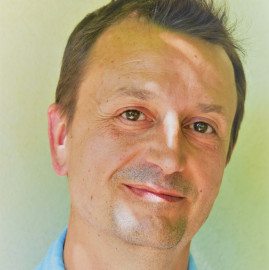
Laurent Castaingt
Over a career spanning some forty years in the performing arts, French scenographer & lighting designer Laurent Castaingt has divided his time between theater, dance, and opera, constantly seeking to explore diverse artistic worlds. He has worked on numerous major stages around the globe, including the Paris Opéra Bastille, Opéra-Comique and the Comédie-Française, the Vienna State Opera, the Liceu in Barcelona, the San Carlo in Naples, the Teatro Colón in Buenos Aires, and the Chorégies d’Orange among dozen others. He has also worked extensively with the Opéra de Monte-Carlo—where he recently designed the set and lighting for Pelléas et Mélisande and will now returns to the delight of local audiences for Porgy and Bess. He collaborates with a wide range of artists—such as Alfredo Arias, Jean-Louis Grinda, Roman Polanski, and Sylvie Testud—and has worked on virtually all stage productions featuring Alain Delon, an actor whose extensive theatrical career is often overlooked. His passion for his craft led him to publish a book in 2023 titled Le Théâtre de la Lumière – « The Theatre of Light » (Éditions Deuxième Époque), which focuses on the art of stage lighting. Laurent Castaingt has received three nominations for the French Molière Award for Best Lighting Design.

Eleonora Rodigari
Born in Italy, Eleonora Rodigari graduated in Set Design and Lighting Design from the Accademia di Belle Arti di Brera, after which she completed the Lighting Design program at the Accademia del Teatro alla Scala in Milan. Immediately afterwards, she joined that very same Scala’s team as Assistant Lighting Designer for Zeffirelli’s Aida, Adolphe Adam’s Le Corsaire choreographed by Anne-Marie Holmes, and the revival of Nureyev’s Don Quixote ballet. She also contributed to the creation of the new permanent lighting installation for the Teatro alla Scala Museum under the artistic direction of Pier Luigi Pizzi. She regularly collaborates with Etienne Pluss, Bruno de Lavanère, and Laurent Castaingt, with whom she co-designed the lighting for this production of Porgy and Bess . Her professional experience, both on the opera stage and for the theatre, includes Hong Kong, Lyon, Avignon, Stockholm, Tours, Naples, and Rome operas Opera, as well as the Festival d’Aix-en-Provence. She will be currently working as Assistant Set Designer for Fidelio as directed by Jean-Romain Vesperini in Portugal; for the world premiere of Dreamers at the Festival d’Aix-en-Provence, directed by Claus Guth; and for Norma at Dutch National Opera & Ballet, directed by Jetske Mijnssen.

Caroline Roëlands
A choreographer, dancer, jazz singer, and teacher, Caroline Roëlands specialises in major musicals, revues, and American-style vaudeville—distinct from the French theatrical genre of the same name, this refers instead to the transatlantic equivalent of the music hall. Active on both sides of the Atlantic, she has performed at venues ranging from the Théâtre Mogador, the Grand Théâtre de Genève, and the Casino de Paris to the vast world of Broadway in New York, where she choreographed many of the repertoire's most famous productions—such as Grease and The Fiddler on the Roof, to name just two well-known works to European audiences. She has created choreography for shows featuring Nicole Croisille, Jeff Panacloc, and at Disneyland Paris, as well as for Roberto Alagna during his highly acclaimed musical foray into the world of Al Capone. Her talents have been sought after for French television series like En famille and Une famille formidable, while Bob Fosse entrusted her with choreography for his film Star 80. It is worth recalling that Fosse directed the eight-time Oscar-winning film Cabaret; Caroline Roëlands paid him a stirring tribute during a special program dedicated to him on the French national radio station France Culture. Finally, she joined Ariane Mnouchkine—founder of the “École Nomade du Soleil”—for an itinerant masterclass in Amiens.
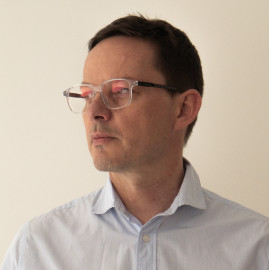
Julien Soulier
A graduate of the École des Beaux-Arts in Saint-Étienne, Julien Soulier began his career creating films for planetariums, developing a visual language sensitive to both space and storytelling. In 2008, he joined set designer Rudy Sabounghi—creator of the sets for the Porgy and Bess production featured here—as a set design assistant. He subsequently shifted his focus to video design, notably for a highly acclaimed production of Un Ballo in Maschera at the Chorégies d’Orange in 2013. Since then, he has collaborated with Sabounghi on numerous opera and theater productions, including Tosca and Don Carlos in Trier (Germany), Il Turco in Italia performed in Vienna and Monte-Carlo, Tristan und Isolde in Liège, and many other operas and theatrical works. He also works with Emmanuelle Favre—renowned for her set designs for the Paris Olympic Games—on video designs for concerts, musicals and operas, such as Das Rheingold and Reyer’s Sigurd in Marseille, creating designs that deliberately lend a "heroic fantasy" aesthetic to certain scenes.
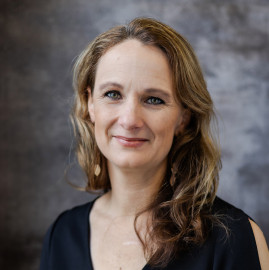
Antoinette Huyssen
South-African born Antoinette Huyssen is Chorus Master at Cape Town Opera and also directs the Cape Town Chamber Choir. She holds a Master's degree cum laude in classical voice from the University of Cape Town (UCT). She also holds a Postgraduate Diploma from the same University and a distinction for the Trinity College London, and completed her Bachelor of Music degree at the UCT in piano and classical guitar in 2001. Antoinette Huyssen was a student conductor at the Drakensberg Boys' Choir school in 2003 and, commencing that year, she studied choral conducting under the Norwegian conductor, Kåre Hanken. She was Director of Music of the Philharmonia Choir of Cape Town from 2006 to 2012, during which time she had the opportunity to conduct several of their concerts together with orchestra, including Handel’s Messiah. She lectured in voice at Stellenbosch University from 2016 to 2021 and taught singing for the South African Army. She worked as a vocal coach and accompanist at the College of Music, UCT, from 2010 until 2017. As a soprano, Antoinette is a frequent oratorio soloist together with the Philharmonia Choir of Cape Town and the Symphony Choir of Cape Town. Antoinette enjoys performing Art Song repertoire and has sung for the Songmakers’ Guild on several occasions. Other great passions of hers are historically informed performance practice and ensemble singing.

Michael Sumuel
American bass-baritone Michael Sumuel takes on the title role of Porgy—a part he previously performed in Washington and at the Houston Grand Opera last season. It is worth recalling that in 1976, Houston was the first major "classical" opera house in the United States to open its doors to a work that had previously been relegated to the realm of Broadway productions, at least within the country. Sumuel has been cast in the title role for the fiftieth anniversary of that landmark production. On stages across the US and abroad, he has distinguished himself in roles such as Alberich in Berlin (in a critically acclaimed Ring Cycle), Leporello in Munich, Figaro in Sydney, Sharpless in Madama Butterfly (in Toronto, Glyndebourne, Santa Fe, and Los Angeles), Don Giovanni in Chicago, Escamillo in Oslo, and Masetto in San Francisco. He also embraces the Baroque repertoire—with frequent forays into the works of Bach (including both Passions, the Magnificat, and the Christmas Oratorio) and Handel—as well as the oratorio genre, performing the Requiems of Mozart (with the New York Philharmonic), Brahms, and Fauré, and Beethoven’s Ninth Symphony with the Los Angeles Philharmonic. Furthermore, he delights in exploring the more specialised world of contemporary works, notably X: The Life and Times of Malcolm X, in which he sings the title role.

Brittany Olivia Logan
Fresh from the Young Artist Program at the Metropolitan Opera in New York—and following her studies and a promising early career in her native country - California-born soprano Brittany Olivia Logan has already performed numerous leading roles. These include the Priestess in Aida and Clotilde in Norma (both at the Met), the Countess in Le nozze di Figaro, Liù, Mimì, Marguerite, and many others. American critics have praised her voice as radiant, powerful, clear, and rich. She was recently heard alongside Yannick Nézet-Séguin in Die Walküre in Rotterdam. She also embraces the demanding path of contemporary works, such as Will Todd’s opera Migrations—commissioned by the Welsh National Opera in Cardiff to commemorate the 400th anniversary of the Mayflower’s 1620 departure from Plymouth—and the title role in Lalolavi at Cincinnati Opera (part of its Black Opera Project), the first-ever "Afrofuturist" opera in the repertoire.

Bongani Kubheka
Following his studies and a promising start to his career in his native country, South African baritone Bongani Justice Kubheka attended masterclasses with renowned figures such as Dame Kiri Te Kanawa, Susan Bullock, and Richard Bonynge. After performing numerous leading roles in South Africa—including Don Giovanni, Don Basilio, the Commendatore, and Don Magnifico in La Cenerentola—he soon rose to international prominence, notably at La Fenice in Venice. Although the COVID-19 pandemic forced him, like many emerging artists of his generation, to forgo engagements in Hanover, Parma, and Venice, these opportunities have merely been postponed; next season, he will join the resident ensemble of the Deutsche Oper Berlin, where he is set to perform the roles of Escamillo, Masetto, and the title role in Il barbiere di Siviglia. He is no stranger to the world of Porgy and Bess, having previously performed the role of Crown at the São Paulo Opera in Brazil. Bongani Justice Kubheka won First Prize at the WDR Young Stars Competition in Germany and was a finalist in the Operalia competition in London.
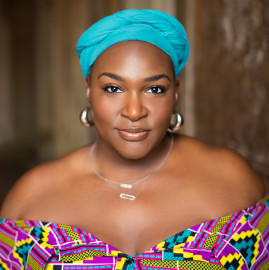
Leah Hawkins
Soon after winning the Metropolitan Opera’s Beverly Sills Award, American soprano Leah Hawkins was invited to sing several major roles—including Madame Lidoine in Dialogues des Carmélites at the Dallas Opera—and was subsequently engaged by the Met to sing Serena in Porgy and Bess and later Leonora in Il Trovatore. She will soon perform the title role in Tosca at La Monnaie in Brussels, adding to her track record of leading roles on major stages that also include the Paris National Opera, the Bavarian State Opera in Munich, and the Washington National Opera. Equally at home in opera and concert settings, she has performed Verdi’s Requiem at the Met under Yannick Nézet-Séguin—a conductor with whom she soon reunited for Beethoven’s Ninth Symphony in Philadelphia—and appeared at the Hollywood Bowl in Los Angeles under the baton of Gustavo Dudamel. The Opéra de Monte-Carlo has invited her to perform the role of Serena in Porgy and Bess, a part she has already sung at various venues throughout the United States.
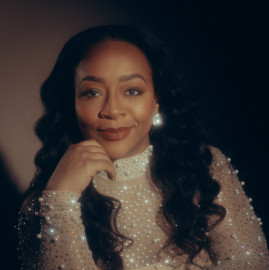
Brandie Sutton
It is precisely in the role of Clara—which she portrays in this production—that American soprano Brandie Inez Sutton recently made her debut at the Metropolitan Opera in New York, a house where she had previously appeared in Massenet’s Cendrillon and as the First Niece in Britten’s Peter Grimes. She has truly made the role her own, having performed it not only in New York but also in Vienna and St. Louis. Brandie Inez Sutton is equally at home as Pamina in The Magic Flute or Violetta in La Traviata as she is in the Broadway musical repertoire, contemporary opera premieres, and even the world of pop music. She also frequently performs major solo works with orchestra, such as Carmina Burana. Initially, Brandie Inez Sutton had chosen a career in biology—a subject she studied at university—but the director of the university choir in which she sang noticed her exceptional vocal gifts and steered her toward an operatic career that has since taken her to Hamburg, Dresden, Frankfurt, Vienna, Philadelphia, St. Louis, and Geneva. In Porgy and Bess, she opens the vocal fireworks with the iconic solo "Summertime."
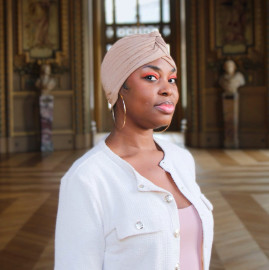
Adriana Bignagni Lesca
Gabonese mezzo-soprano Adriana Bignagni Lesca has established herself as a prominent figure on the international opera scene. She is distinguished by a warm, velvety timbre that borders on the contralto range, as well as by an expressive vocal depth that combines power and nuance in her performances. Trained at the Bordeaux Conservatory under Maryse Castets, she boasts an extensive repertoire spanning from the Baroque era to contemporary music; recent engagements have taken her to the Théâtre du Capitole in Toulouse, the Opéra de Tours, the Paris National Opera, and the Aix-en-Provence Festival. Her international engagements are equally numerous—including Hamburg, Barcelona, Zurich, Berlin, and the Salzburg Festival—covering major roles ranging from Mozart and Offenbach to Dvořák, Janáček, Luciano Berio, Wagner, Rameau, and John Adams. She readily extends her artistic explorations into the realm of popular song, particularly through traditional Gabonese music, which she champions in stylistically eclectic concerts. In this spirit, she created the "Afro-lyric" show Arelacoyava, blending classical operatic singing, trance-like Pygmy chants, Afrofunk, flashes of electronica, contemporary music, traditional blues, and earthy rhythms borrowed from hip-hop.
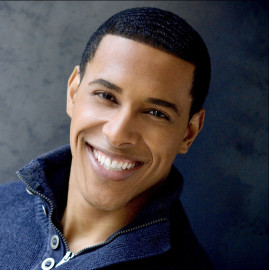
Donovan Singletary
Porgy and Bess is some kind of a signature work for American bass-baritone Donovan Singletary; he has performed the roles of both Jake and Crown at the Metropolitan Opera in New York, the English National Opera in London, the Dutch National Opera, Seattle Opera, and La Scala in Milan—an ideal track record for this genre-defying repertoire. He has also been heard in other roles such as Leporello, Escamillo, Figaro and Capulet in Gounod’s Roméo et Juliette. These performances have taken him to Glyndebourne, Washington, the BBC Proms, Atlanta, Fort Worth, and even the Baltic states. Beyond the opera stage, he distinguishes himself in works such as Verdi’s Requiem as well as in the art song and Lieder repertoire—performing at venues including Carnegie Hall, the Royal Albert Hall, and the Berliner Philharmonie. Finally, he has received a Grammy Award for the video recording of this same work with the Metropolitan Opera.
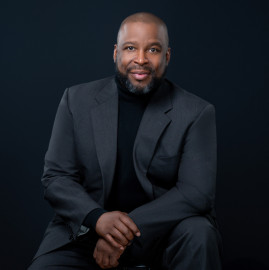
Chauncey Packer
Following his studies and a promising start to his career in his native country, the boisterous and flashy role of Sportin’ Life is a familiar one for American tenor Chauncey Packer. As a matter of fact, he has performed it at the Metropolitan Opera in New York, Washington National Opera, Opéra-Comique in Paris, La Scala in Milan, and in San Francisco and Atlanta, as well as on tour across Europe with the New York Harlem Theatre. After Monte-Carlo, he is set to reprise the role at the Komische Oper Berlin. International critics have highlighted the tenor’s versatility: he is an opera singer, certainly, but also an actor equally at home on major operatic stages, in the realm of Broadway and even in progressive rock. His stage roles range from Don José to Alfredo, Rodolfo to Pinkerton, and Tamino or Cavaradossi to Amon in Philip Glass’s Akhnaten, and he often tackles the the oratorio repertoire, including works such as Messiah and Mozart’s Requiem. On record, he appearsin Porgy and Bess for Decca, as well as on the DVD of the same work in Francesca Zambello’s San Francisco production, as well as Scott Joplin’s Treemonisha in a new historically accurate orchestration.
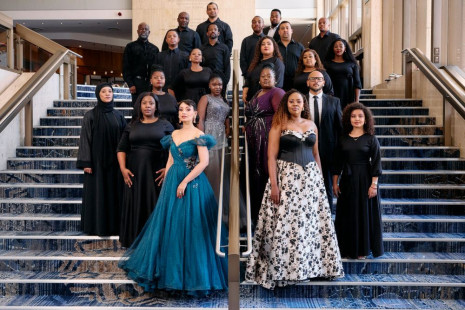
One of the most compelling and varied vocal ensembles on the operatic stage, South African Cape Town Opera Vocal Ensemble received the Chorus of the Year prize at the 2013 International Opera Awards in London— placing Cape Town Opera among the world's leading companies and recognising its emotional honesty, stylistic flexibility and unmistakably South African identity. The ensemble's repertoire spans the great operatic canon alongside sacred works, jazz, African choral music, spirituals and contemporary compositions. Known for their versatility and vibrant singing, the Chorus maintains a busy schedule, performing on stages around the globe. He notably distinguished himself with his own production of Porgy and Bess, which was presented during a European tour. Under the leadership of Chorus Master Antoinette Huyssen, the singers perform in multiple languages, including South Africa's indigenous languages, bringing classical technique and live musical experience to every stage.
Act I
The heat lies over Catfish Row like a weight. It is a summer evening in Charleston, and the little African-American community comes alive as it always does, not because life is easy, but because people have learned to make what they can from what they are given. There is laughter in the street, and singing, and the dry rattle of dice. Clara rocks her baby to the tune of “Summertime”, her voice carrying softly through the hot air. Nearby, the men gather around their game. They laugh and curse and throw the dice, though everybody knows the game is not always honest. For a little while they forget the debts, the hunger, the work, and the things that wait for them when the evening is over. Among them sits Porgy. His body is crippled and poor, and life has dealt him blows enough for several men. Yet there is something in him that remains unbroken. He has little to give, but what he gives is given freely. There is Crown, a strong man ruled by anger and drink. There is Bess, the woman beside him, carrying in her face the hard history of a life that has never been gentle. There is Robbins, a neighbour, Serena’s husband. And there is Sportin’ Life, who understands weakness and makes his living from it, peddling happy dust and promises with the same easy smile. Then the evening breaks apart. Crown, drunk and blind with rage, kills Robbins. The laughter stops. Crown runs, knowing that both the law and his own conscience will follow him. He leaves Bess behind. Sportin’ Life sneaks to her with an offer. New York, he says, money, pleasure, freedom. But his freedom has a steep price, and Bess knows it all too well. She turns away from him. Porgy opens his door. He does not ask what she has done or where she has been. He gives her a place to sleep, and in that poor room she finds something she has almost forgotten exists: dignity.
The following night, the people gather around Robbins’s body in Serena’s room. His widow prays, and the neighbours pass a collection from hand to hand so the dead man can be buried properly. Then the police arrive, asking questions, searching for Crown. Fear moves through Catfish Row once more. Yet among all this sorrow, something quiet begins. Porgy and Bess begin to love one another.
Act II
Weeks pass. Porgy’s shack becomes a small place of peace. There is little in it, but Bess is there, and for Porgy that is enough. She tries to leave her old life behind. She knows the past is not a thing that disappears simply because a person wishes it away, but she keeps trying. Sportin’ Life keeps coming back. He talks about New York and money and easy living. He knows how to make temptation sound like salvation. Bess listens, but she refuses him once again.
Then the people of Catfish Row leave for a picnic on Kittiwah Island. Porgy stays behind because his crippled body will not carry him with them. Crown comes, he finds Bess alone and takes her away even though she fights against him, but the past has strong hands.
For a week she is gone. When she returns at dusk, she carries the week in her face and in the way she walks. Porgy does not question her, does not punish her for what has happened. He simply takes her back. She tells him she is afraid that she can never escape Crown. Porgy assures her that while he has strength, she will not face the world alone.
Then the hurricane comes. The fishermen are still at sea. Their wives and families gather together while the wind tears at Charleston. The people pray because there is nothing else left to do. In the middle of the storm, Crown returns to Serena’s room and demands Bess, but she tells him that she belongs to Porgy now. The storm grows louder, the sea rises, and Crown goes out into the darkness to save the fishermen.
Act IIi
By morning the wind has gone. The sea leaves wreckage behind it, and Catfish Row counts its dead. Jake, Clara’s husband, is among them. Many believe Crown is dead too. But death does not always come when people expect it. During the night, Crown returns secretly to Catfish Row to take Bess back, because he still thinks of her as something he owns. Porgy is waiting. The two men meet in the darkness and there is no room for words now. They fight, and the struggle becomes more than a fight between two men. Porgy kills Crown. It is a terrible thing, and Porgy knows it, but he believes there is no other way to save Bess from the man who has always treated her as property.
The law comes for Porgy. The next afternoon he is arrested and taken away. His absence leaves Bess alone, and Sportin’ Life sees the opening he has been waiting for. He tells her Porgy will be gone for years, so there is no reason to wait. Then he brings back the old promises—the happy dust, the money, New York, the life he has always offered her. Bess fights hard, but a person can fight only so long without hope. Porgy is gone, and the little room that once seemed like safety has become empty. At last she gives in and follows Sportin’ Life to New York.
When Porgy is released a week later, he returns to find his shack empty. For a moment there is only the emptiness but soon Porgy begins to move. He does not know what waits for him in New York. He does not even know whether Bess will return to him or whether the road will bring him anything but sorrow. But he knows where she is, and he knows he cannot remain behind. So he sets out. Catfish Row watches him go, a poor crippled man traveling toward a great city with almost nothing in his hands. Yet he carries what the others have nearly lost: the belief that love is worth the journey. And the story ends there—not with happiness secured, nor with sorrow defeated, but with a man moving forward because his heart tells him there is still something worth finding.
Five facts to discover before the curtain rises
1
At the New York premiere in 1935, the editorial team at The New York Times was so unsure as to whether Porgy and Bess was a classical opera or a Broadway musical that it assigned two reviewers, one for each discipline, and published their reviews side by side. Even today, opinions remain divided. For his part, Gershwin described his work as a ‘Folk Opera’, meaning that it focused on ordinary people, with folksy tunes (all of his own invention) and a resolutely popular language.
2
The original play, written by Dorothy and Dubose Hayward, was simply called Porgy, and Gershwin had initially intended to use that same title. However, the young soprano Anne Brown, who had heard about the opera project, approached the composer for an audition, and it was she who was cast in the role of Bess, a role that was originally somewhat minor. During rehearsals, Gershwin was so impressed by her vocal and stage presence that, in her honour, he decided to rename the work Porgy and Bess.
3
The hugely famous jazz singer and musician Al Jolson, known for his extravagant blackface performances – in other words, a white artist wearing make-up to resemble a Black person, or rather to mock Black people in those odious minstrel shows – approached Gershwin for the role of Porgy. But the composer insisted that almost the entire cast be genuinely African-American, a rather daring challenge in 1935, when the infamous Jim Crow laws – which institutionalised racial segregation across all the south-eastern states of the United States – were still in force.
4
If you happen to visit the beautiful city of Savannah, the setting for the novel and film Midnight in the Garden of Good and Evil, you will search in vain for a neighbourhood called Catfish Row. The opera’s librettist deliberately adapted the name of a real neighbourhood, Cabbage Row – a culinary improvement, no doubt, since after all catfish is a staple of South-Eastern American cuisine.
5
The lullaby ‘Summertime’, which opens the first scene of the opera – and which many music lovers are unaware even comes from Porgy and Bess – has rapidly conquered the world as a solo piece: it has been covered by hundreds of artists, including none other than Miles Davis, Louis Armstrong, Ella Fitzgerald, Herbie Hancock, Sidney Bechet, John Coltrane, Sonny Rollins, as well as Jascha Heifetz, Joshua Bell and Leontyne Price. The elegance of the melody and the originality of its harmony – which is neither classical nor entirely jazzy – make it the perfect material for the most beautiful variations. Admittedly, the work is brimming with such famous tunes as ‘Summertime’, ‘I Got Plenty o’ Nuttin’ and ‘It Ain’t Necessarily So’, but their jazz-inspired composition style remains fairly simple and straightforward – which may well have contributed to their fame, in fact. In reality, however, the rest of the opera displays extraordinary melodic, harmonic and orchestral complexity, rivalling that of Debussy, Richard Strauss, Ravel and, at times, even Alban Berg and Arnold Schönberg – composers whom Gershwin greatly admired.

Porgy & Bess will be presented for the first time in the history of the Opéra de Monte-Carlo. How does one approach such an emblematic work when it is being introduced for the first time in an opera house?
When a work is presented for the first time in a theatre, it seems important to me that it be done strictly in the spirit intended by the composer. This is all the more necessary in the case of Porgy and Bess, which aims to be a powerful testimony to the life of a very specific community. Faithfulness, however, does not exclude imagination or poetry…
There is a certain echo between Gershwin and the worlds of Ravel and Debussy. Having staged L’Heure espagnole, L’Enfant et les Sortilèges and Pelléas et Mélisande in recent seasons, do you perceive this musical dialogue as a fertile dramaturgical thread for your stage interpretation?
This dialogue stems from Ravel’s (moderate) use of jazz and from the fact that these works are all emblematic of the first part of the twentieth century and will remain masterpieces in the history of opera. Dramaturgically, there is a kind of fantasy that links Ravel to Gershwin, as well as, in my view, a great poetic sensibility in the pointing out the difficulties of simply “existing” (Pelléas et Mélisande).
Porgy & Bess is often described as a “popular opera”, infused with jazz, spirituals and street songs. How can this hybridity be conveyed on stage without smoothing out its singular character?
It seems to me that one must go straight to the core of the story, where poverty, sex and drugs are set against the great longing for hope that runs through the work. One must therefore accept this hybridity while avoiding the easy cliché of the musical comedy, which would run counter to Gershwin’s intentions. This is a proper opera!
The work clearly belongs to the verismo tradition, portraying ordinary people confronted with violence, addiction and the desire for emancipation. Catfish Row itself becomes a microcosm in which the community plays an essential role. How can this human dimension be brought to life without falling into illustrative naturalism?
We encounter the same difficulty when staging La Bohème (Puccini). My approach is therefore that of “poetic realism”, magnificently illustrated by French cinema of the interwar period. It poeticizes relevant social issues.
Catfish Row must necessarily be a realistic place in which a small, hard-working and rather poor community lives. It is also a place where family plays a major role, and also religion, allowing us to show the significance of the community’s spiritual life. It is their singing that will give the show its poetic power.
At the heart of the drama lies an impossible love, fragile and threatened by both social and personal forces, while the chorus acts almost like a collective character. How do you direct the performers so that both this intimate tension and the community’s powerful presence can emerge?
Directing performers always requires a very secret kind of alchemy. One must know what one wants to show while leaving an indispensable space for the artists to act freely. The danger of the lyrical impulse I mentioned is that it may take up too much room at the expense of the truth of the moment. Within the framework he has set, the stage director must channel the energies without giving the impression of restraining them.
The chorus is a character in its own right. It lives, enjoys itself, suffers, prays… this is in fact the case in many operas. In Porgy and Bess, the chorus does not merely comment; it takes part in everything! This momentum must be guided according to the same principles as for the soloists.
After exploring French Impressionism and many other aesthetic worlds in Monaco, what does this immersion in 1930s America represent for you? What personal perspective do you bring to this work, which profoundly marked the history of opera at the time of its creation?
I would like Monaco to instantly understand the immense aesthetic and visual shock that Porgy and Bess represented at its premiere. Of course, everyone knows Gershwin or at least has a generally positive image of him. Yet the drama in this music is far removed from the songs that made him world-famous.
Such is the mark of its success: everyone knows “Summertime” without necessarily realising that it is the opening aria of the opera. At the very beginning we have a brilliantly virtuosic overture, then a few jazzy piano notes with people dancing, and finally the poetic calmness of “Summertime”. What a shock!
I have no particular anecdote to share except a personal one: my great-uncle, Joe Ballard, was an American pianist and was — if I believe what I was told (and I have no reason to doubt it) — the first to perform Rhapsody in Blue in France. The story continues, with a smile…
A Rhapsody in Black
Though world-famous, George Gershwin was still seeking recognition as a serious composer. Travelling through Europe in 1928, he met the leading composers of his time: Ravel, Auric, Stravinsky, Prokofiev, Schoenberg… Although he took no lessons from them, he studied extensively and absorbed the influence of these masters.
For Gershwin, opera was the supreme genre, the means by which a composer of so-called “light music”, far wealthier than his European counterparts, could assert himself and earn true recognition. On this arduous path, Jacques Offenbach had preceded him by several decades, a journey that had led to Les Contes d’Hoffmann (whose third act was premiered at the Opéra de Monte-Carlo by Raoul Gunsbourg). For very different reasons, the major works of both composers would enjoy a triumphant, but posthumous, legacy.
Looking more closely at its subject, Porgy and Bess, first performed in 1935, is above all a portrait of the Black community, among the earliest victims of the Great Depression. And yet, it is not a political opera. Gershwin himself explained it this way: “I like the cruel simplicity of the characters. Behind each one lies the fate of a thousand others.”
And so, as in cinema, we move from a wide shot (Catfish Row, a wretched ghetto on the outskirts of Charleston) to close-ups of our two protagonists, and of those who shape and steal their destinies.
At heart, it is the story of a misunderstanding… Beautiful and alluring, Bess is pathologically malleable. With Crown, a violent bad boy, an alcoholic and a drug user, she embraces his excesses without question. With Porgy, the only man who reaches out to her, she becomes gentle and nurturing, sincerely imagining that she might find happiness in a life defined by “lack”: for Porgy has nothing and needs nothing, except Bess… When she ultimately follows Sportin’ Life, she plunges back, with little hesitation, into the deadly current of a dissolute life, easy, and inevitably short. No matter! For Bess, what matters most is never really having to decide, but simply allowing herself to be carried along by events.
All three men love her, and Gershwin gives each of them a striking musical theme. Bess herself has none… If we want to hear her, we must listen for her through the others.
A work of genius, abundant and deeply sensitive, Porgy and Bess endures because it touches upon the universal. Against prevailing opinion, Offenbach no longer wanted to write operettas, just as Gershwin no longer wanted to compose musicals.
Posterity proved them right.
We should always listen to Artists.
Jean-Louis Grinda
DIRECTOR